
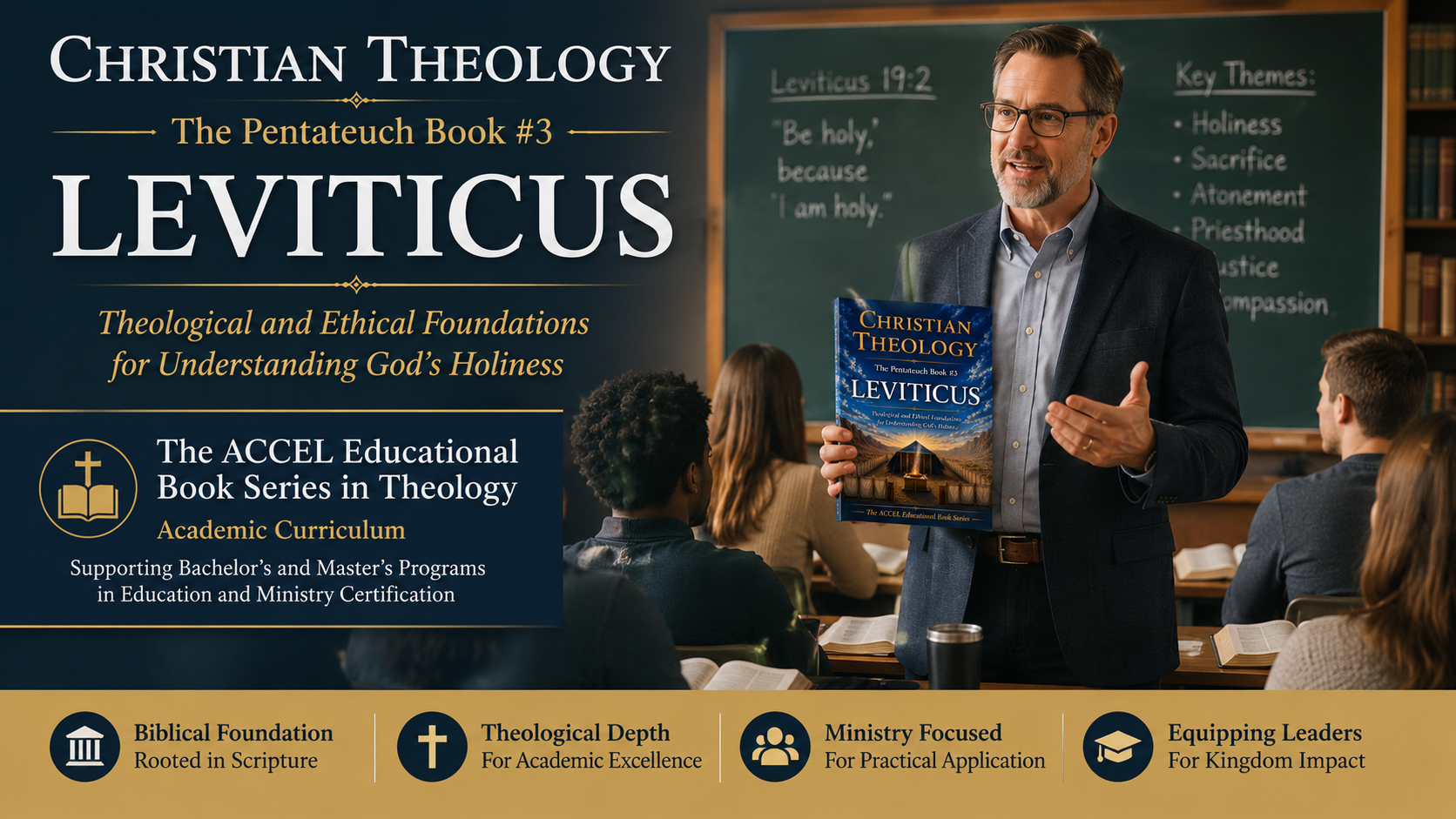
Theological and Ethical Foundations for Understanding God’s Holiness
The ACCEL Educational Book Series in Theology
Academic Curriculum for Theological Studies Supporting Bachelor’s and Master’s Programs in Education and Ministry Certification
Leviticus, the third book of the Pentateuch, stands as one of the most important theological foundations in the Holy Bible. Often viewed as a book of ancient laws and rituals, Leviticus is far more than a collection of ceremonial instructions. It is a profound revelation of God’s holiness, humanity’s need for redemption, and the sacred relationship between God and His people. Through its teachings, Leviticus establishes spiritual principles that continue to shape Christian theology, ethical living, worship, and ministry today.
At the heart of Leviticus is the call to holiness. God repeatedly commands His people to live holy lives because He Himself is holy. This message extends beyond religious rituals and enters every area of human life, including worship, morality, justice, leadership, compassion, and personal conduct. The book teaches that holiness is not simply an outward practice but a lifestyle of obedience, reverence, and devotion to God.
Leviticus and Christian Ethical Living
Leviticus is not limited to ceremonial worship; it also establishes powerful ethical principles that remain foundational for Christian living. The Holiness Code found in Leviticus chapters 17–26 expands holiness into practical daily conduct.
One of the central themes explored in Leviticus is the sacrificial system. The various offerings described throughout the book reveal the seriousness of sin and the necessity of atonement. Burnt offerings, sin offerings, peace offerings, and guilt offerings served as acts of worship, repentance, and reconciliation between humanity and God. These sacrifices pointed prophetically toward the ultimate sacrifice of Jesus Christ, whose death and resurrection fulfilled the deeper spiritual meaning behind the Levitical system.
The Day of Atonement, described in Leviticus 16, remains one of the most significant theological teachings in Scripture. It illustrates humanity’s need for forgiveness and God’s provision for reconciliation. The High Priest entering the Holy of Holies symbolized mediation between God and humanity, foreshadowing Christ’s role as the eternal High Priest for all believers.
Leviticus also provides valuable insight into spiritual leadership and priestly ministry. The consecration of Aaron and his sons demonstrates the sacred responsibility of those called to serve God and guide His people. The book emphasizes that leadership requires holiness, obedience, humility, and accountability. These principles continue to inspire pastors, counselors, educators, and ministry leaders today.
Beyond ceremonial worship, Leviticus contains powerful ethical teachings that remain relevant for modern Christian living. The Holiness Code calls believers to practice honesty, justice, compassion, respect, and love for others. One of the most recognized commands from Leviticus is: “Love your neighbor as yourself.” This timeless principle became central to the teachings of Jesus Christ and continues to guide Christian discipleship and ethical conduct.
The book also introduces the Sabbatical Year and the Year of Jubilee, revealing God’s concern for social justice, economic restoration, and compassion for the vulnerable. These teachings emphasize freedom, restoration, and community responsibility, reflecting God’s desire for fairness and human dignity.
Academic Curriculum for Theological Education
As part of The ACCEL Educational Book Series in Theology, this curriculum is designed to support:
- Bachelor’s Degree Programs
- Master’s Degree Programs
- Ministry Leadership Certification
- Pastoral Counseling Studies
- Christian Coaching Programs
- Biblical Theology Courses
- Christian Leadership Development
The curriculum integrates theological scholarship, biblical interpretation, ethical application, ministry preparation, and spiritual formation. It equips students, pastors, counselors, educators, and ministry leaders with a deeper understanding of biblical theology while strengthening their spiritual and academic foundations.
Through comprehensive theological exploration, students gain insight into God’s holiness, covenant relationship, redemptive plan, and ethical expectations for His people.
Conclusion: Living in the Holiness of God
Leviticus remains one of the most spiritually significant books in all of Scripture. Its teachings reveal the majesty of God’s holiness, the seriousness of sin, and the beauty of redemption through divine grace.
Far from being irrelevant ancient law, Leviticus offers timeless spiritual truths that continue to shape Christian theology, ethical living, worship, leadership, and discipleship. It calls believers to lives marked by holiness, justice, compassion, humility, reverence, and faithful obedience.
By understanding Leviticus, Christians gain a deeper appreciation for the redemptive work of Jesus Christ and the sacred calling to live as God’s holy people in every generation.
Book Sold @ Amazon
English Version: https://a.co/d/06Uzt8HV
Portuguese Version: https://a.co/d/0fQuB2R8
Spanish version: https://a.co/d/0fFghWPT
Book Sold @ bookshop.org soon! Look for the book by M C Pinto